Published on February 26, 2026
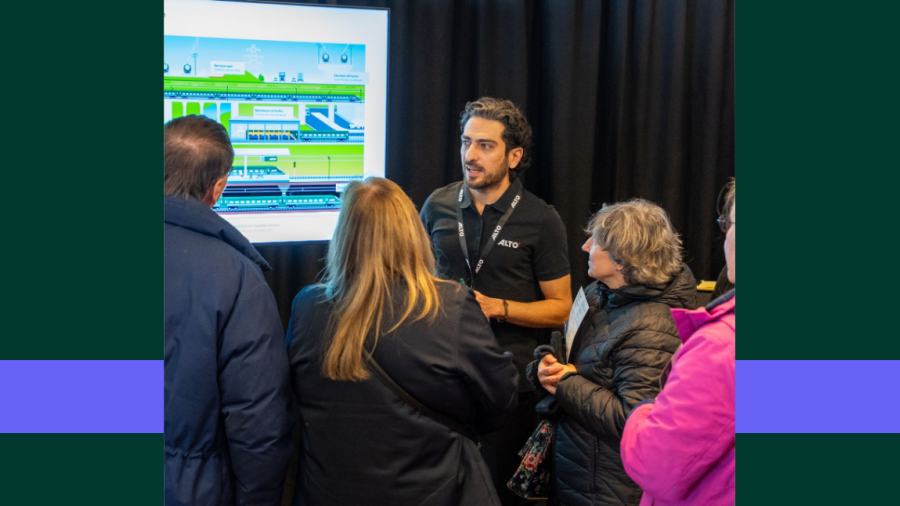
Another busy week for the Alto team, marked by many meetings and honest discussions with citizens and stakeholders on the high-speed rail project.
In virtual meetings and discussions with communities, many of you have asked questions, expressed your concerns and shared your expectations. Thank you very much for your participation and interest! Lots of legitimate questions were raised, particularly in areas with concerns about the project’s effects on communities and living spaces.
In this post, we’ll go over some of the past week’s most frequently asked questions.
Why invest in a high-speed rail project in Canada?
The proposed high-speed rail corridor is home to approximately 17 million people, representing 41% of Canada's population, and is expected to grow by about 28% by 2041. Moreover, our current transportation infrastructure is already stretched and won’t be sufficient to meet future needs. High-speed rail is designed to provide an efficient, reliable, low-emission travel alternative to meet this growing demand.
Meanwhile, Canada’s economy is stagnating and our productivity is among the lowest in the G7. The project could generate significant economic benefits that are estimated at approximately $24.5 billion in GDP, while driving employment, tourism and local businesses. Without this investment, traffic, cost and production issues are likely to ramp up.
What criteria will influence route selection?
Route selection is based on a rigorous analysis combining the technical requirements of high-speed rail, feasibility, social and environmental impacts, social acceptability, costs and feasibility.
Input from the public, municipalities, stakeholder groups and elected officials plays an important role in this analysis. Our goal is to progressively refine the corridor to identify the most balanced scenario, integrating the project seamlessly into the landscape and minimizing impacts on communities and ecosystems.
Will the network be safe and reliable in winter?
Yes. Fast and high-speed trains are already operating reliably and safely in climates comparable to Canada’s, including Finland, Japan and northern China, where temperatures range from -40°C to +40°C.
Alto’s infrastructure and trains will be specifically designed for the heavy snowfalls, ice and extreme cold that define Canadian winters. Proven solutions such as track snow removal, switch and power cable de-icing, and increased monitoring will be incorporated into the design and tested prior to commissioning.
How will road access and emergency services be maintained?
Public safety is a priority. Alto will work closely with municipalities, the communities in traversed areas and emergency services to ensure safe road access is maintained wherever the rail corridor intersects with existing roads.
Crossing solutions (bridges, underpasses or overpasses) will be developed in collaboration with local authorities and emergency services to meet every territory’s needs. From the design stage, the route’s layout takes into account accessibility and emergency response needs.
How can businesses participate in the Alto project?
The project represents major investments that will generate numerous opportunities for Canadian businesses.
Guided by the Buy Canadian policy, Alto and its partner Cadence aim to maximize benefits for local workers, suppliers and businesses, including Indigenous businesses.
Interested companies can visit Cadence, the private development partner’s, website to learn more about the calls for tender and register as potential suppliers: https://cadence.info/en/procurement.
Let’s keep talking
The discussions held over the past few weeks show how essential our dialogue with the public is to moving the project forward. These discussions allow us to explain certain choices, adjust our approach and move forward transparently.
Keep an eye on Alto’s blog to discover the next answers to the most frequently asked questions and share your feedback on our online consultation platform. Maintaining a dialogue will always be our priority.
Share this blog post
Subscribe to the blog RSS feed