Published on February 5, 2026
Updated on September 15, 2026
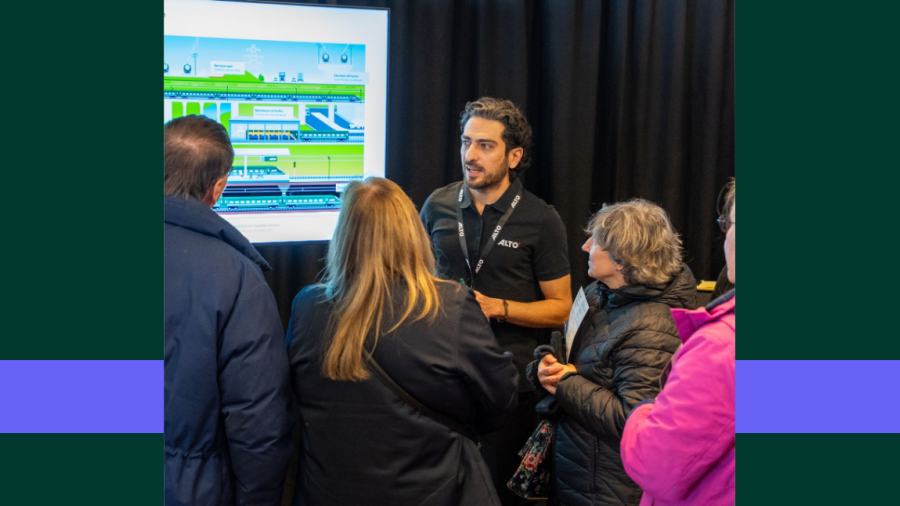
In January, Alto launched a broad public consultation process with two main goals in mind: to talk openly with members of the public about the high-speed rail project, and to gather their feedback. We covered a wide range of topics, from benefits to potential impacts. Our teams have had the privilege of connecting with citizens through virtual sessions, round table discussions, and in-person open house events, where we heard questions, concerns, and perspectives from right across the corridor.
Many questions and concerns came up often, because they’re important. This blog series is meant to return to those key themes in order to provide clear, accurate information in support of a meaningful public dialogue.
What does the 10‑kilometre‑wide study corridor mean, and does it represent the area where land would be acquired to build the high‑speed rail network?
The approximately 10-kilometre-wide study corridor is a planning tool, not a proposed route. It does not indicate where land would be acquired. At this early stage, this broad study area is used to explore different alignment possibilities, carry out environmental and technical studies, and gather input from the public before any route decisions are made.
Alto aims to minimize impacts on private land by identifying options that maximize the use of existing rights-of-way, such as highways, rail corridors, utility corridors, and public land, wherever possible.
As the project advances, this broad corridor will be narrowed significantly. Ultimately, a high‑speed rail network requires a much smaller right‑of‑way—averaging about 40 to 60 metres—to safely accommodate train operations and maintenance.
How does public input influence project decisions and what will lead Alto to adjust its proposal?
Public input is a key part of Alto’s decision-making process. Alto has chosen to consult early, before selecting a route, so feedback from residents, municipalities, Indigenous communities, and organizations can directly inform technical analyses and design choices.
The comments and concerns raised during consultations are documented and referenced to inform the refinement of the corridor under study. They help identify local areas or issues that warrant special consideration—such as sensitive or significant environments, agricultural realities, community priorities, or technical challenges—and assist in shaping mitigation measures.
The objective is to identify the alignment that best balances long-term benefits and minimized impact based on studies and what is heard through consultations.
Why is there no station planned for Kingston and how does Alto decide where stations will be located within station cities?
Alto is developing the project based on the mandate it received from the Government of Canada, which defined seven station cities along the Québec City–Toronto high-speed rail corridor. Under the current mandate, there is no requirement for a stop in Kingston. Specific station locations will be determined to balance accessibility, performance, travel times, and integration with local transit options.
Existing intercity passenger rail services will continue serving communities and to integrate with the broader transportation system.
Why is Mirabel included in the study corridor, and how is Alto approaching the region given the significant sensitivity associated with past expropriations?
Alto recognizes that the population of Mirabel has experienced deeply significant impacts from past projects, the effects of which are still felt today. Trust was shaken, and this is why Alto is approaching the high-speed rail network project with respect, humility, and responsibility. We will not repeat the past.
Mirabel is part of a broad study corridor—a planning area used to analyze different options before proposing a potential alignment for the network. At this stage, no route has been selected, and the study corridor does not identify any specific lands that may be subject to acquisition. Alto is working collaboratively with the municipality, the mayor, and her team, and is planning an open house session in the coming weeks (February 2026) to engage directly with residents.
Why is a Southern corridor being considered in Ontario when people are raising concerns about its environmental and community impacts?
No alignment has been selected at this stage. Alto is studying more than one option between Ottawa and Peterborough to compare benefits, impacts, and feasibility before recommending a proposed route.
In Eastern Ontario, the northern option is shorter, but it may require more complex construction in remote and environmentally sensitive areas.
The Southern option passes through a more densely populated area and may offer advantages such as comparatively simple construction and operations due to terrain and accessibility.
Both options are being assessed, and findings from studies and public consultations will inform the final recommendation.
This is the right time for residents and local stakeholders to share their concerns, questions, and suggestions. Alto welcomes all feedback, which is why we are consulting early in the process, so that public input and technical studies together can inform the final recommendation.
Keeping the conversation going
The conversation doesn’t stop when public consultation activities have concluded. We’ll continue to use this space to address the questions we hear and to share clear, honest information as the project evolves.
We encourage you to return regularly to the Alto blog to learn more about the questions and answers most often raised, and to share your views through our online consultation platform.
Share this blog post
Subscribe to the blog RSS feed