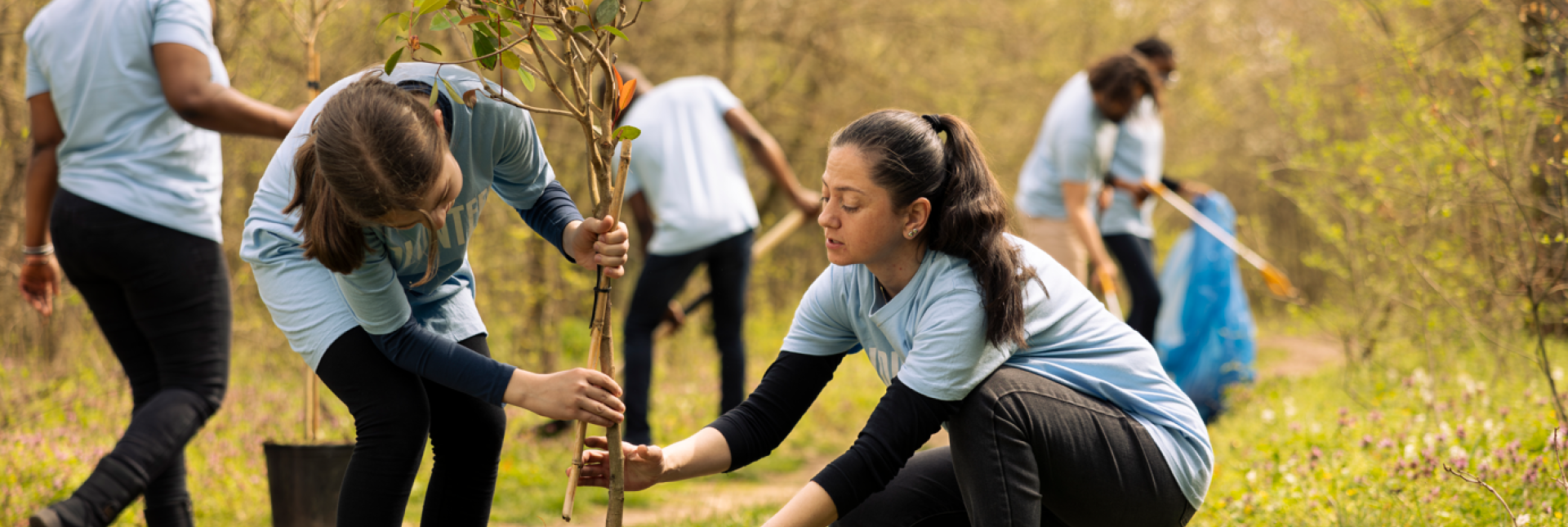
As an organization committed to supporting the growth and well-being of local communities, we place great importance on the active involvement of community members in shaping and bringing meaningful projects to life. Our commitment goes far beyond financial support—we view local stakeholders as true partners.
By collaborating with community organizations and businesses, we work to strengthen economic vitality, foster social connection, and develop initiatives that respond to real community needs.
Through this approach, we’re able to support a wide range of projects that promote social cohesion, innovation, and lasting environmental benefits—maximizing our positive impact within the community.

Supported Initiatives
Economic Vitality
- Local economic development
- Innovative projects in the rail industry
- Education and training
Environmental Vitality
- Rehabilitate natural environments
- Activities designed to raise public awareness of environmental issues
- Programs fostering green innovation
Social Vitality
- Seasonal programming
- Local community events
- Educational activities
Indigenous Communities
Alto encourages Indigenous groups to submit applications for projects or initiatives that have impacts both within and beyond their communities.

Submit a request
Before submitting a request, we encourage you to:
- Read the community partnership policy
- Determine whether your request fits into one of the three categories (environmental, economic, or social vitality).
- Fill out the form


Some Important Information
Applications may be submitted at any time throughout the year and will be reviewed during the quarterly meetings of the evaluation committees. However, we strongly recommend submitting requests at least 90 days before your desired response date.
- March 2026 – Assessment of requests received between November 22, 2025, and February 20, 2026.
- June 2026 – Assessment of requests received between February 21 and May 22, 2026.
- September 2026 – Assessment of requests received between May 23 and August 21, 2026.
- December 2026 – Assessment of requests received between August 22, and November 20, 2026.
To ensure every request we receive is handled diligently, we’ve put in place a thorough review process for community partnership requests. The following assessment criteria have been established to analyze the eligible applications:
- Adherence to one or more areas presented
- Benefits for the communities targeted by the project
- Alignment with the Corporation’s values
- Belonging to one of the eligible territories
- Geographic scope of the project
- Quality of project planning, implementation and schedule
- Visibility for the Corporation
- Opportunity for the Corporation to engage directly with the community (activation)
- Integration of the principles of diversity, equity and inclusion (DEI)
- Alignment with the principles of sustainable development
(The list of criteria may vary according to the types of applications.)
The following organizations are not eligible:
- Individuals
- For-profit companies
- Federal, provincial or municipal political organizations (political parties, partisan groups, lobbyists)
- Religious organizations
- Charitable organizations that raise and redistribute funds to other organizations (foundations, service clubs)
The following types of projects are not eligible:
- Construction, renovation and improvement of facilities intended for organizations rather than the public
- Projects that promote political or religious views
- For-profit projects
- Debt repayment
- Projects of a controversial nature (e.g., involving gambling activities, environmentally damaging activities) or raising issues of social acceptability in the community
- Lobbying campaigns
- Fundraising activities (fundraisers and galas)
The following expenses are not eligible:
- Staff training costs
- Working capital
- Fees for attending events (ticket purchases)
- Advertising expenses
- International travel expenses and activities outside Canada
- Activities that took place prior to confirmation of funding
- Alcohol related costs
- What are concrete examples of initiatives that could be supported?
Economic: Alto aims to stimulate local economic growth, support innovation opportunities, and promote education and training related to rail industry, as this will help stimulate community economic growth. Examples of initiatives that could be supported include: innovative projects in the rail industry, conferences on sustainable mobility, education programs related to the project’s core business, or local or Indigenous entrepreneurship initiatives.
Environment: By creating the high-speed rail network, Alto seeks to protect and restore natural environments, as well as promote green innovation and environmental awareness. Examples of community initiatives that could meet these goals include: conservation of forests and wetlands, planting initiatives to support biodiversity, educational programs, projects aimed at reducing carbon footprints, and initiatives that value Indigenous knowledge.
Social: Alto wants to leverage the project to strengthen social cohesion, promote local and Indigenous culture, and support community well-being. Examples of community initiatives that could be supported by Alto include: Indigenous events, seasonal markets, local community events, educational activities, and community gatherings.
- Who can submit an initiative to Alto’s Community Partnerships Program?
For example: nonprofit organizations, schools, municipalities, Indigenous associations, and certain community groups are eligible. For-profit businesses, political or religious organizations, and individuals are not eligible.
- What is the range of financial support that can be granted?
For the first year of Alto’s community partnership program, the maximum amount that can be granted for a project is $50,000.
Projects are evaluated in three categories: $0 to $9,999, $10,000 to $24,999, and $25,000 to $50,000. Alto does not fund multi-year partnerships and reserves the right to award an amount lower than requested.
- How do you submit a project proposal?
Interested individuals or groups must complete the application form available on Alto’s website. All applications must be completed and comply with the program’s criteria. Two internal committees review applications at regular intervals.
The deadlines for project submissions are listed on the website; it is recommended to check the due dates for each selection cycle. The project must begin within the fiscal year of submission or at the latest, during the first quarter of the following year.
- Aboriginal Experiences, Arts and Culture
- Association générale étudiante en urbanisme de l’École des sciences de la gestion
- Business in the Streets
- Canadian Association for Supported Employment
- Centre d’amitié autochtone de Lanaudière
- Conseil de la Nation Atikamekw – Atikamekw Sip
- Festival Kwe!
- Invasive Species Centre
- LodgePole Arts Alliance
- Pathways Canada
- Regroupement des centres d’amitié autochtones du Québec
- Réseau des Centres d’expertise en mobilité urbaine
- Toronto Community Benefits Network
- Tourisme Wendake
- Youth Employment Services