Published on November 3, 2025
How Fast Is High-Speed Rail? Comparing Global Systems and Canada’s Future
When is a train considered high-speed?
It's a simple question with a surprisingly layered answer. Around the world, high-speed rail has become a symbol of national progress, connecting cities, economies, and people faster than ever before. As Canada charts its own path toward a high-speed future, it's worth exploring what "high-speed" really means and how countries have mastered it in their own ways.
A World in Motion
When Japan's Shinkansen first departed Tokyo Station in 1964, it didn’t just set a new speed record—it transformed the way the world thought about rail travel. Today, high-speed trains race across more than 20 countries at 250-350 km/h, supported by over 56,000 kilometers of dedicated lines.
Some nations have perfected the art of balance by combining speed, design, and reliability to fit their geography and economy.
- Japan: The Shinkansen reaches speeds of up to 320 km/h.
- China: The network spans over 40,000 km of high-speed lines, the largest in the world to date. High-speed trains typically reach top speeds of 350 km/h.
- France: The TGV operated by SNCF Voyageurs regularly reach speeds between 300-320 km/h.
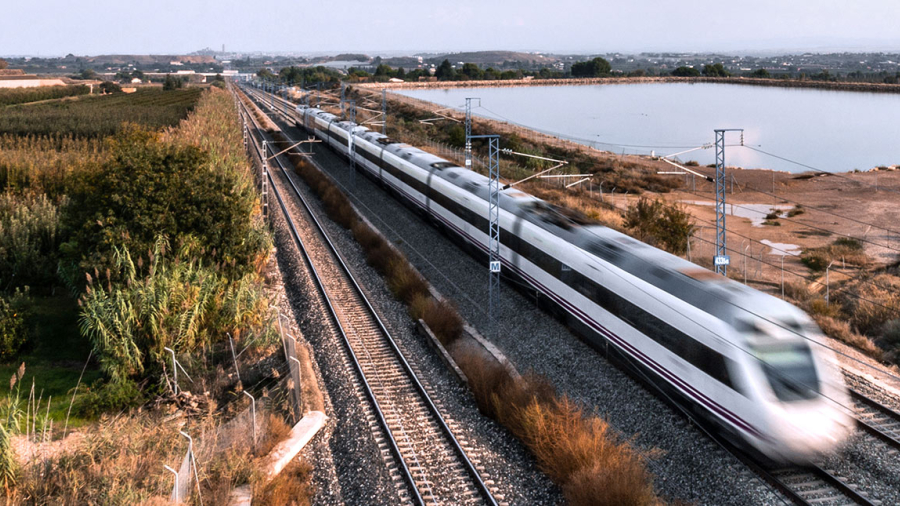
- Spain’s AVE regularly operate at 300–320 km/h.
In some other cases, high-speed trains go at slightly lower speeds for different reasons: track geometry, shared rail corridors, or national infrastructure standards, while still being considered high-speed trains. It’s the case for:
- Germany’s ICE trains often run between 200–230 km/h on upgraded lines (originally built for conventional trains).
- Italy’s Frecciabianca service operates at 200–250 km/h, while its Frecciarossa trains reach up to 300 km/h.
- Sweden’s SJ X2 (X2000) trains reach a top commercial speed of 200 km/h on routes between major cities like Stockholm, Gothenburg, and Malmö.
Each high-speed train model reflects the respective country's local priorities. Some emphasize national reach; others focus on linking city pairs. But they all share one idea: that fast, efficient travel drives opportunity and connection.
Engineering Speed
Achieving speeds above 250 km/h requires more than a powerful train; it's the synergy between technology, infrastructure, and design. High-speed rail relies on a combination of specialized infrastructure and precision engineering to ensure safety, comfort, and efficiency at scale.
Here are some of the key components:
- Dedicated tracks: Fully enclosed and grade-separated, these tracks are typically reserved exclusively for high-speed trains, eliminating interference from road traffic or freight.
- No level crossings: Roads and railways never intersect, removing the risk of collisions and delays.
- Optimized track geometry: Long, straight lines with minimal curves allow trains to go faster in a safer manner.
- Continuous welded rails: These seamless tracks face better temperature variation, and reduce noise and vibration, enhancing passenger comfort.
- Aerodynamic design: Sleek train profiles minimize air resistance, improving energy efficiency and performance.
- Engineered tunnels and bridges: Built with precision to handle high-speed travel safely across various landscapes.
- Signalling and traffic control system: It allows running different types of trains (direct and non direct) safe and reliable.
It is through this harmony of systems—track, power, design, and safety—that allows high-speed rail to deliver not just powerful speed, but reliability and comfort on every journey.
What It Means for Canada
Wherever the fastest trains in the world have been implemented, they have transformed how people move – offering fast travel times without the hassles of being stuck in traffic or waiting long hours at the airport. It’s about going from one city centre to another swiftly.
Canada's relationship with distance is unlike most. Our geography is vast, our climate demanding, and our cities spread far apart. But those very traits make high-speed rail a transformative idea.
Here at Alto, we are leading the development of the country’s first high-speed train designed to reach speeds of 300 km/h or more. Nearly 1,000 km of dedicated, primarily electrified tracks will be built to connect major cities including Toronto, Peterborough, Ottawa, Montréal, Laval, Trois-Rivières, and Québec City.
By offering a fast, reliable, and low-emission alternative to driving and flying, Alto is set to reshape how Canadians connect with each other and their country.
Once upon a time in Spain
Former CEO and Chairwoman of ADIF (Administrador de Infraestructuras Ferroviarias), the state-owned Spanish company responsible for managing the country's railway infrastructure, Maria Luisa Dominguez has seen it first hands with Spain’s AVE, having worked close to 30 years at ADIF. Now acting as Chief Project Management Officer for Alto, she brings an informed perspective on how high-speed rail can transform a country.
When Spain launched its first high-speed line between Madrid and Sevilla in 1992 after a decade of development, the response was immediate: train ridership surged as people embraced the time savings and convenience.
Since then, the network has expanded, now spanning over 4,000 km. Today, high-speed rail is not only a symbol of Spain’s transportation success — it has surpassed air travel in popularity on many domestic routes, like Madrid-Barcelona.
Evolution of the Spanish high-speed rail network over the years

Like Spain back then, Canada is at the threshold of something much bigger than transportation. High-speed rail represents a shift in how Canadians connect with our economy, our environment, and one another.
Follow our journey to see how we’re building a new era of travel ― one that’s faster and built for generations to come.
Share this blog post
Subscribe to the blog RSS feed