Published on March 4, 2026
As Chief Project Management Officer, Maria Luisa brings more than 25 years of international leadership in high‑speed rail to Alto, combining deep international experience with disciplined, public‑interest‑driven delivery. Having helped expand Spain’s high‑speed network and led major programs as President‑CEO of ADIF, she now applies rigorous project management and trust‑based leadership to delivering Canada’s first high‑speed rail network—designed to connect regions and endure for generations.
What about the high-speed rail project really speaks to you?
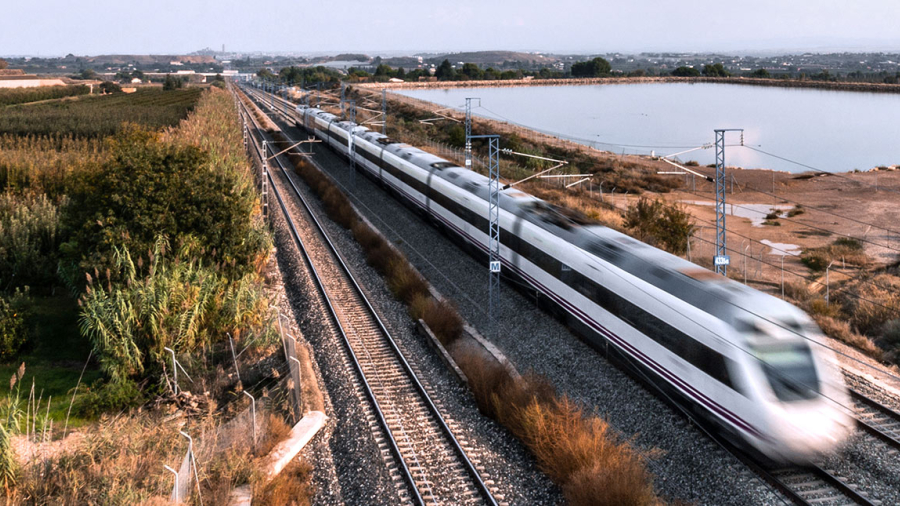
I believe in high-speed rail because I’ve seen how it transforms a country. In Spain, it completely changed how we understand distance. When I was a child, distance meant driving time. Today, it means how long it takes by high‑speed train.
It is also the most sustainable way to move people. Hundreds of passengers can travel at once using electricity; it’s a low-emission and high-capacity solution. Stations are close to city centres, travel is reliable, and time is truly usable — for work, relaxation, or connection. You can make a round trip between cities in a day. That’s significant.
High‑speed rail also opens the door to discovery, tourism, and economic vitality in cities that were once considered far away. It changes mobility — and life — for the better.
High‑speed rail also opens the door to discovery, tourism, and economic vitality in cities that were once considered far away. It changes mobility — and life — for the better.
How would you describe your role in a single sentence?
I lead a team that will deliver a high-speed rail project within scope, schedule, and budget, a network that will truly serve taxpayers and meet the needs and expectations of Canadians.
Leadership styles vary, and they count for a lot in any organization – how would you describe yours?
Leadership is built progressively. At the beginning, you manage your own scope. Later, you learn to work with strong experts, to listen, and to remain open to learning — while always defending public interest and responsibility.
As teams grow, delegation becomes essential. It is not easy, because you feel you are losing control, but success comes from surrounding yourself with very strong people — with people better than yourself. You must be demanding, but you must also recognize good work, because credibility as a leader comes from both.
When teams become very large, leadership is about trust. You cannot be everywhere. You must focus on the global picture and know which elements truly matter. If those are under control, everything else follows.
How does it feel to be working at Alto, and with people who are all so dedicated to the realization of the project?
Alto exists for one purpose: to deliver a high-speed rail network. That is incredibly powerful. The team brings together top expertise across disciplines, and that amplifies confidence.
As an engineer who has spent much of my career on high‑speed rail, being part of this effort is very meaningful. I’ve experienced this, but there are people working on this project now who will one day be on the train they’re working so hard to build, and they will then understand what it really means to have been part of something big and transformative like this.
What is a challenge faced by women in senior leadership, and how have you navigated it in your career?
One challenge is the idea that women have — or should have — a single leadership style. Not true. What matters most is authenticity.
Throughout my career, I learned by observing others, men and women alike. I kept what I believed was good and avoided what was not. I learned how to apply pressure when needed, how to celebrate success, how to defend teams externally, and how to resolve conflict internally.
Leadership is not about gender; it is about people working toward a shared goal. Empathy exists in men and women. What truly matters is being authentic, learning constantly, and building strong teams.
So, openness to learning from others has helped shaped your path. Have you ever had a mentor?
Yes! My first mentor was my boss in the public sector, even though we never discussed Mentorship as such. We stayed in touch after he left the organization. His advice was completely selfless. I trusted him because I knew that everything he said was for my benefit alone. When he passed away, I felt suddenly very lonely; I realized then how significant the relationship had really been to me.
Later, I also had a formal mentor — a woman executive. She supported me during key moments in my career, and I learned enormously from her strength and self‑confidence. Today, we are friends, but I still feel she remains my mentor. I admire her deeply.
How do you support other women’s leadership growth?
I mentor women engineers, especially when they transition from student to professional life. Many women leave technical fields early, so having someone they can call when challenges arise is important. I can offer them perspective and advice based on my experience.
The most important message I have for women looking to progress their careers is: do not wait.
Many women feel they are not ready and hesitate to apply for new jobs if they don’t meet every requirement. You must be brave, apply, and show both your capability and your desire to grow.
What would you like Canadians to understand about Alto?
That this really is a unique opportunity for Canada. The technology is proven, and we are learning from systems already at work around the world.
Alto will offer Canadians a modern, safe, reliable, and sustainable way to travel. It will also respond to real challenges in the corridor: congestion on highways and pressure on airports.
High‑speed rail is resilient. Trains can continue operating safely when roads or flights are disrupted. So, this project is not only about speed; it is about reliability, sustainability, and positioning Canada where it belongs — as a G7 country leading in modern transportation.
Share this blog post
Subscribe to the blog RSS feed