Published on February 19, 2026
Planning a high-speed rail network is a complex task, especially with all the related technical considerations. Alto’s team strives to optimize the Québec City-Toronto high-speed rail project before construction begins. Here’s what we’re dealing with in this development and pre-construction phase.
The route: The foundation of a high-speed rail network
The first and most complex task is defining a route for Alto’s rail network. This is the key to ensuring its trains will run quickly and efficiently.
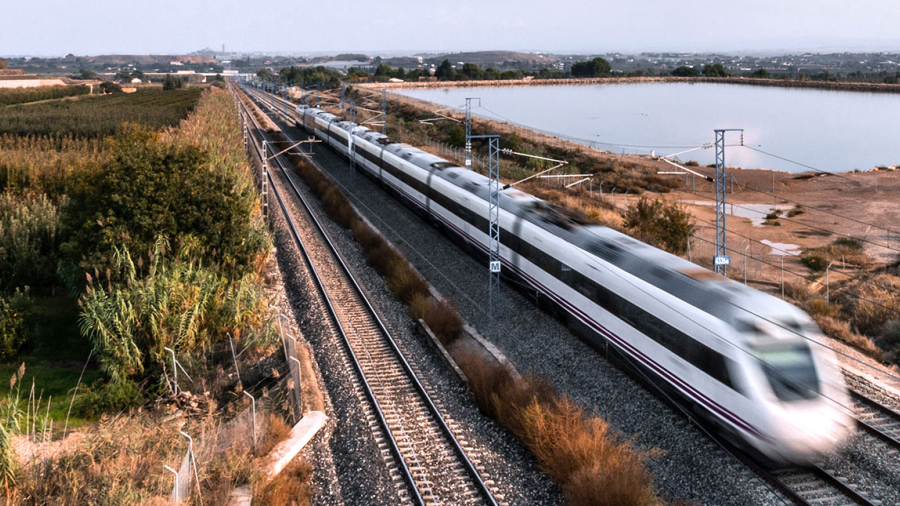
The route is specifically designed for high-speed rail, with long straight segments and gentle curves to allow the train to reach its cruising speed of 250 km/h to 300 km/h.
The network will be for Alto’s exclusive use, unlike conventional rail, which must share the tracks with freight trains. This will ensure a punctual, high-performance service.
💡 From corridor to route: A two-pronged approach
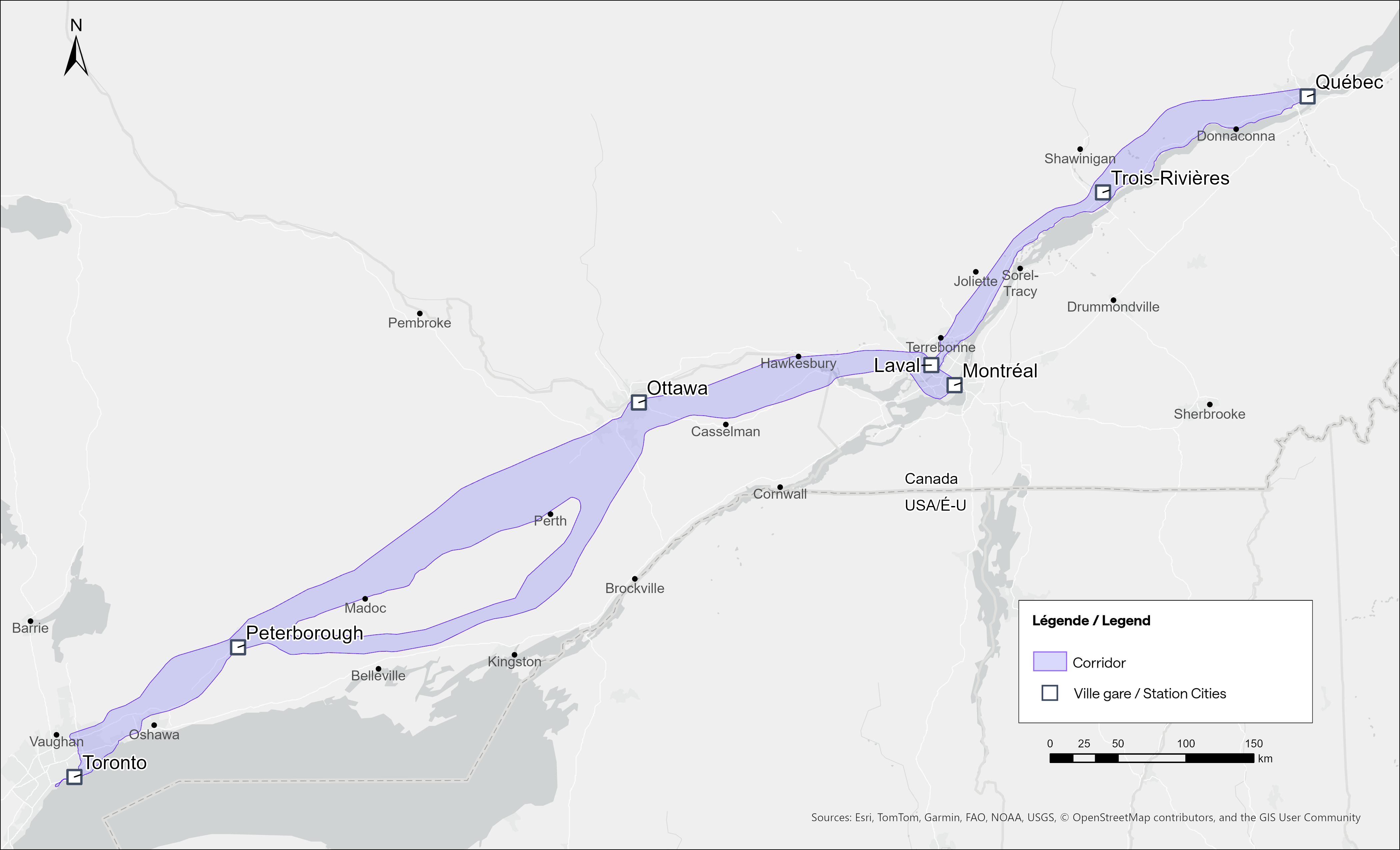
Before defining the future rail network’s route, Alto’s team determined a corridor, a broader strip of land onto which the route will be built. This corridor was unveiled in January and is presented during our public consultation activities. Public and stakeholder feedback will inform our analyses as we define the final route.
Rails designed for high speeds
High-speed trains also stand out for the rails on which they run, called “continuous welded rail.” These are welded together into long, seamless bars.
This type of rail, which is essential to achieving high speeds, has many benefits. The lack of joints commonly found on traditional railway tracks reduces shocks, resulting in a smoother ride and a more comfortable passenger experience. Continuous welded rail also requires less maintenance, thereby leading to long-term savings.
Depending on their location, Alto’s rails will be installed on either ballast, a layer of crushed stone, or reinforced concrete slabs. The combination of these two types of track bases enables us to draw on their respective benefits. We can therefore use ballast for its reduced cost, low-maintenance nature, and good noise- and vibration-absorption properties, or concrete for its stability and durability; very convenient in tunnels and stations.
A safer means of transportation
High-speed rail is one of the world’s safest modes of intercity transportation.1 This partly stems from the fact that its tracks are physically separate from regular road traffic. There are no crossings connecting roadways and the tracks, thereby minimizing the risk of collisions. In addition, the high-speed rail network’s right-of-way is completely fenced in. Elevated tracks and tunnels mean the trains can cross entire cities without interacting with other road vehicles or trains.
These physical safeguards are complemented by the use of cutting-edge technology for real-time train monitoring, emergency braking and trespassing detection.
Proven performance in winter conditions
High-speed rail has proven effective in winter climates, including Sweden, Norway, Finland, Russia, China and Japan. Solutions exist to ensure safety and protect network components, including switches and the catenary system, which powers the trains. Alto could use thermal blowers, compressed air systems, de-icer or scraper-equipped trains, or heated cables. The network’s status will also be monitored continuously.
Looking to learn more?
Are you a railway enthusiast or curious to learn more about Alto? The project’s technical details will be released as the design phase progresses. Stay tuned:
- Sign up for our newsletter
- Follow Alto on LinkedIn and Facebook
1 : Source: NSC Injury Facts, 2025
Share this blog post
Subscribe to the blog RSS feed