Published on December 11, 2025
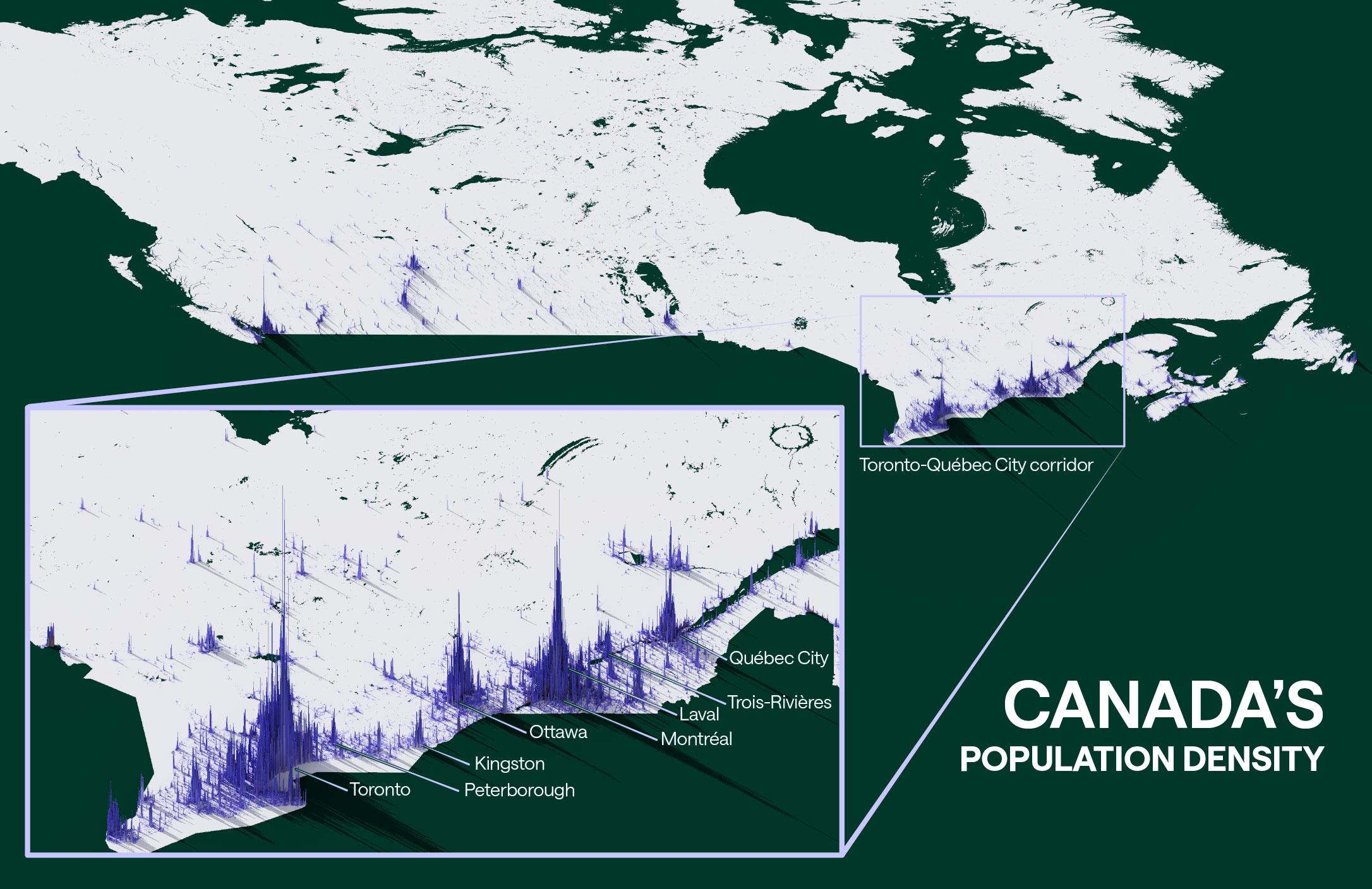
Canada’s Québec City–Toronto corridor is the most populated in the country, and is home to approximately 17 million people, over 40% of Canada's population. Yet having been designed decades ago, the transportation infrastructure connecting its major cities was built for a smaller population and a different economy and is increasingly struggling to keep pace with demand. The result is growing congestion across highways and airports, which slows travel, increases greenhouse gas emissions, and constrains economic activity.
This is where our solution comes in. Congestion, air pollution and slower travel can all be addressed through a new, dedicated high-speed train operating in the corridor.
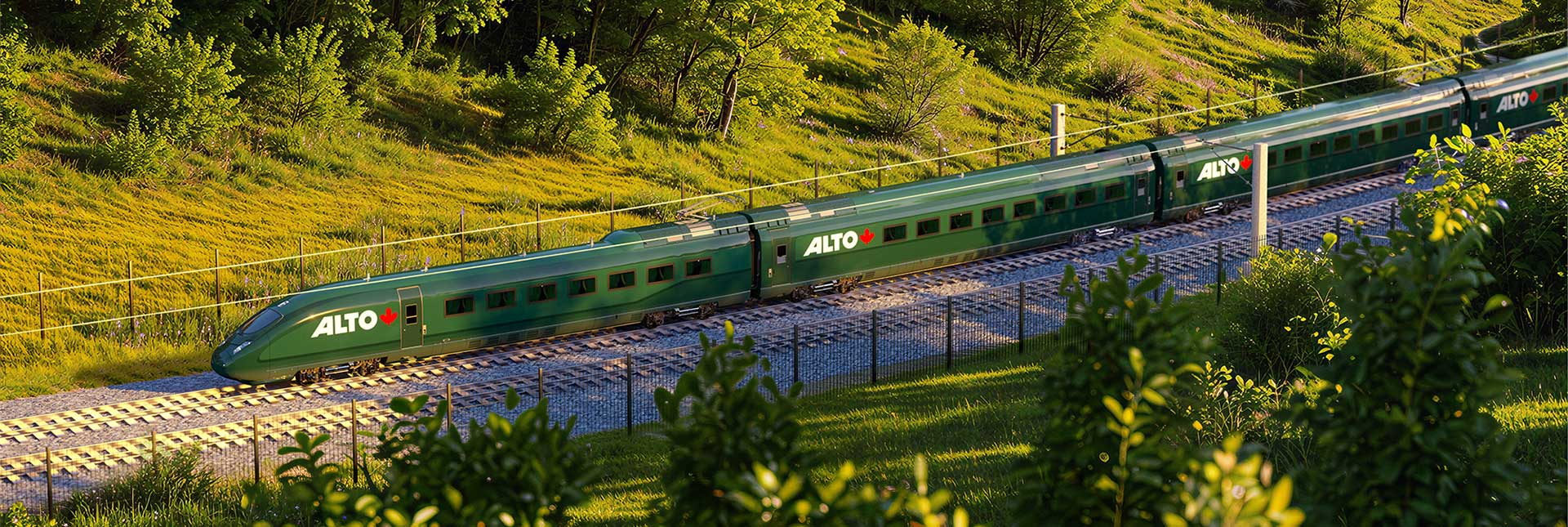
That’s exactly what Alto is working on. Our team is developing a 1,000-kilometre high-speed rail network that will connect at least seven cities between Québec City–Toronto.
Economic impact of an overcrowded corridor
The cost of persistently weak productivity has already affected Canada’s economic performance. In 2024, real GDP per capita declined by 1.4%, making Canada the weakest performer among OECD economies. The Bank of Canada has identified weak productivity growth as a central structural challenge, warning that it constrains sustainable growth, limits wage gains, and leaves the economy more vulnerable to inflation and external shocks. In this context, barriers to mobility are not just an inconvenience—they are a drag on productivity and economic opportunity, especially in the country’s most economically important corridor.
For example, INRIX estimates Toronto drivers waste 61 hours a year stuck in traffic and in Montreal, drivers lose 58 hours per year, which is equivalent to about than a week and a half of work. Economic losses also arise because our young people have less access to certain universities and programs, and our businesses are struggling to attract new talent and find new customers and suppliers.
The addition of Alto’s high-speed train will generate economic benefits well beyond the employment and business opportunities created during the construction phase of the project. According to preliminary estimates, once in operation, its combined impact on productivity, the labour market and tourism will result in an annual GDP uplift of 1.1% for Canada, which is equivalent to about 24.5 billion dollars today.
Rethinking mobility with high-speed rail
Alto is needed because existing transportation infrastructure has already reached its capacity. Highway expansion would not only be costly, but ineffective. With the population expected to reach 21 million by 2041, representing a 28% increase from today, there will be even greater pressure on already constrained transportation networks and growing congestion on the roads. Currently, automobile travel accounts for 97% of trips in the Toronto to Québec City corridor. In other words, the demand for efficient transportation options will only continue to increase.
This growing demand is reflected in Alto's preliminary forecasts*, which indicate that Canada’s high-speed rail could carry up to 24 million riders per year by 2055, capturing approximately 40% of intercity trips on the longest city pairs, such as Toronto–Montréal and Toronto–Ottawa.
A high-speed train would have a significant impact on mobility in Canada, reducing travel time between major cities served by the network by nearly half. A trip from Montréal to Toronto, which currently takes five to six hours by car (where there is no congestion), could be completed in about three hours. For travellers, this means faster, more predictable and more comfortable way to move between major cities.
A high-speed train also stands out for its high reliability. Unlike existing trains, which share tracks with freight trains, Alto will run on its own dedicated tracks, avoiding the delays that come with it. And because it’ll be an electrified grid, it will help reduce greenhouse gas emissions by offering an alternative to millions of carbon-emitting car trips or short-haul flights.
World-class expertise serving the project
Our team is currently engaged in the project’s development and pre-construction phase, which includes consulting with Canadians, determining the route and finalizing the project design. We aim to begin construction in 2029–2030.
To ensure the strength and accuracy of our proposal to the government, we are relying on the expertise of Cadence, a world-class team led by Canadian companies with extensive experience in the design, financing, construction, operation and maintenance of complex, integrated rail infrastructure.
To stay informed about the project’s progress:
- Sign up for our newsletter
- Follow Alto on LinkedIn and Facebook
* Alto uses a multimodal travel demand model, consistent with international practice, to develop its ridership forecasts. This approach reflects established methods used for major transportation projects and considers current intercity demand and travel behaviour by all modes, long-term demographic and economic trends, expected mode shift from car, air and bus travel to high-speed rail, and new trips generated by improved service.
Share this blog post
Subscribe to the blog RSS feed