Understanding reptiles studies: Key words and definitions
Reptile
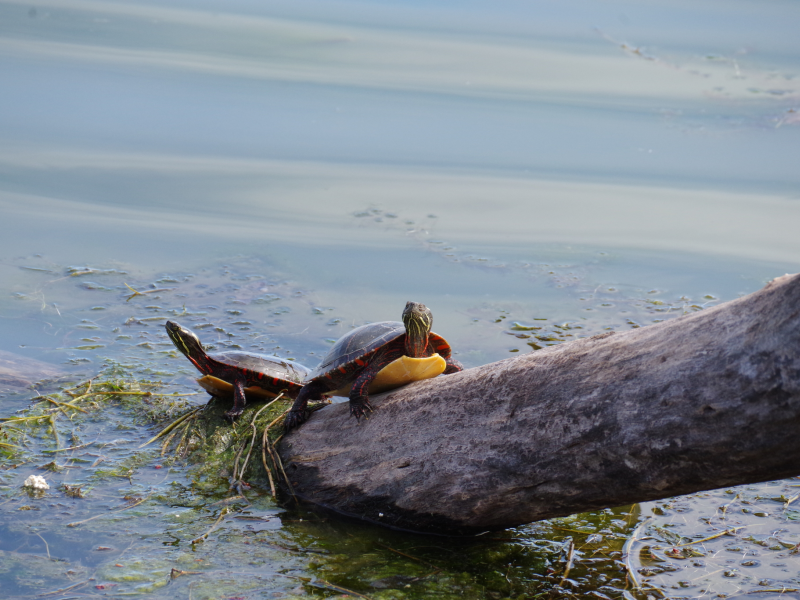
Reptiles are mostly four-legged animals with backbones that warm and cool their body using the surrounding environment and usually lay eggs. Reptiles include turtles, snakes and lizards.
Why study reptiles?
Many turtle species are listed as species at risk by federal and provincial governments, including the Spotted Turtle, Eastern Musk Turtle, Eastern Painted Turtle, Midland Painted Turtle, Northern Map Turtle, Snapping Turtle, Spiny Softshell Turtle, as well as certain snake species, such as the Brown Snake.
Turtles and snakes are excellent biological indicators of ecosystem health. Due to their longevity, limited dispersal capacity, and reliance on a mosaic of habitats, such as wetlands, forests, and open areas, these species are particularly sensitive to environmental disturbances, including habitat degradation and landscape fragmentation.
Field studies will help Alto biologists better understand and protect reptiles when building and operating the new railway, while determining a baseline for future studies.
Video

What do reptile studies involve?
The turtle basking study involves searching wetlands and waterbodies for turtles in the spring and fall periods. Drone and airborne LiDAR (Light Detection and Ranging) surveys can also help document turtle habitats.
The snake study involves the installation of artificial cover objects (manmade "covers" like asphalt or plywood that snakes may rest under) on the ground through the study area, and then returning at a later date to search beneath and near the cover objects for snakes.