
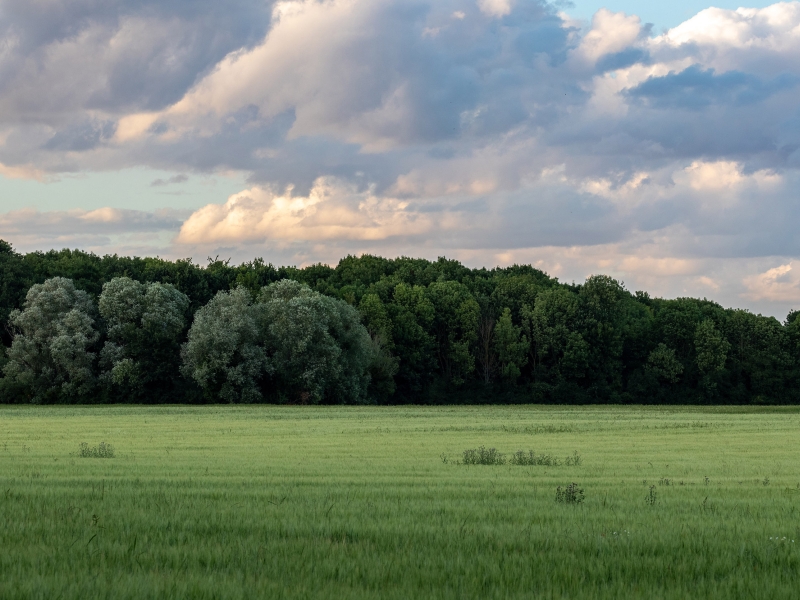
Understanding landscape studies: Key words and definitions
The following terms describe a different sensory dimension of an environment and how people experience it:
Landscape
The visible physical environment—landforms, vegetation, built structures, and spatial patterns—that shape the character and appearance of a place.
Soundscape
The acoustic environment—natural sounds (wind, water, wildlife), human-made noises (traffic, industry), and their patterns—affecting how a place is perceived and experienced.
Lightscape
The lighting environment—natural light (sun, moon, stars) and artificial illumination—its intensity, colour, direction, and distribution, influencing visibility, ambiance, and ecological impacts.
Why conduct landscape studies?
Landscape assessment anticipates the visual, acoustic, and lighting effects of a high-speed rail line and reduces its impacts. The study of the soundscape permits compliance with standards and protects the health and comfort of residents through appropriate noise barriers. The assessment of the lighting landscape optimizes illumination to prevent intrusion, glare, and impacts on biodiversity, while ensuring safety and energy efficiency.
Addressing these three dimensions makes it possible to meet environmental standards and propose technical solutions (landscape bunds, noise barriers, planting, etc.) to improve the integration of the line into the surrounding.

What do landscape studies involve?
The landscape/visual assessment aims to determine the extent to which a project changes the appearance of a place, the landscape’s character, and the visual experience of those who observe it (local communities, road and trail users, visitors, Indigenous peoples). It aligns with several requirements of the Impact Assessment Act and the guidance of the Impact Assessment Agency of Canada, including the identification of valued components, the consideration of Indigenous knowledge, and the analysis of residual and cumulative effects.