Understanding bats studies: Key words and definitions
Bats
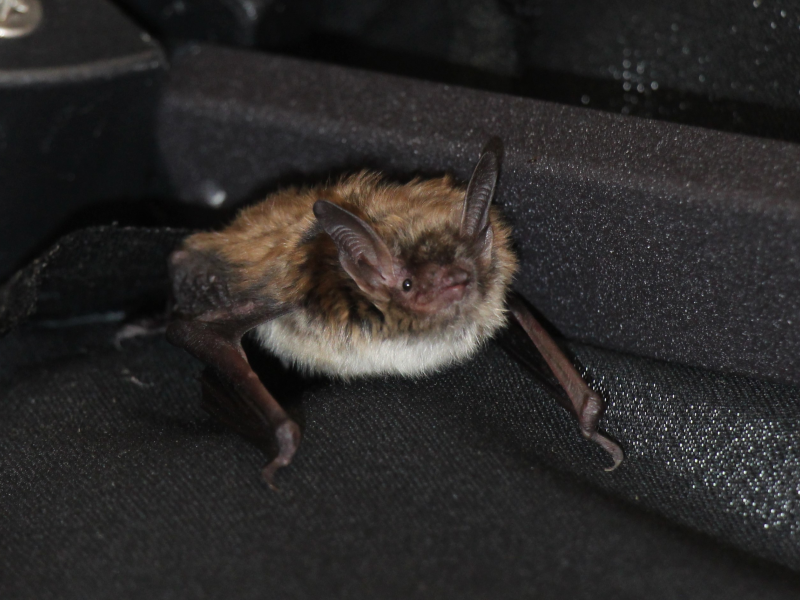
Bats are flying mammals that have forelimbs adapted for flight. Examples of bats commonly found in Canada include the little brown myotis (Myotis lucifugus) and big brown bat (Eptesicus fuscus).
Echolocation
Echolocation is a method that involves emitting very high-pitched sounds, known as ultrasounds, which are generally inaudible to the human ear, and then analyzing the echoes produced when these sounds bounce off elements in the environment. By interpreting these echoes—including their timing, intensity, direction, and changes in frequency—some animals can accurately detect and locate obstacles or prey, facilitating movement and hunting, particularly at night.
Hibernation
A state of minimal activity that some animals, including bats, experience. Hibernation is characterized by low body-temperature, slow breathing and heart rate and low metabolic rate. It most commonly occurs during the winter months.
Why study bats?
Several federal and provincial statutes protect bat maternity roosts (i.e., sites where bats reproduce) as well as hibernation sites. A number of bat species, along with their habitat, are protected under this legislation, including the Little Brown Myotis and the Tri‑colored Bat (Perimyotis subflavus).
By conducting bat studies to determine what habitats are used by bats and which species are present, Alto biologists will better understand how these might change while building and operating the new railway, and what is needed to protect bats and their habitats, while determining a baseline for future studies.


What do bats studies involve?
Available aerial photography and local historical information and observations about bats will be reviewed to identify forests and nearby buildings as potential habitats for bat maternity roosts and hibernation.
Recording units will be placed within the study area to record any bat sounds. Alto biologists will check on the units periodically to ensure they are functioning properly.