Published on February 19, 2026
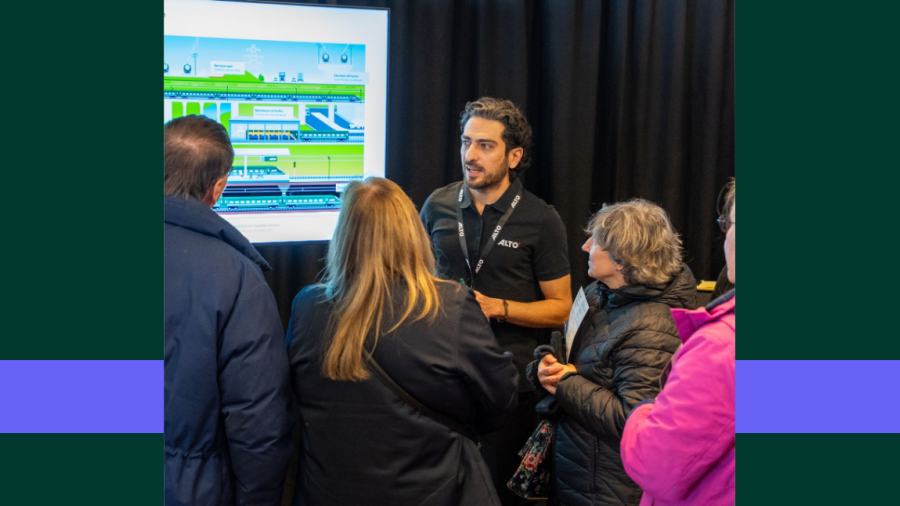
Public consultation on the Alto project continues with activities taking place across the corridor under study, and the public has engaged enthusiastically. Virtual sessions, open houses and discussions on the field have brought together many citizens who take the time to learn, ask questions, and share their concerns. These essential discussions showcase the interest in the project and directly contribute to its evolution.
These online and in-person talks are an integral part of our approach. They help improve and refine the project, as well as transparently explain the choices made. To continue on our last post, we are addressing several frequently asked questions asked over the past week to provide clear, honest answers and maintain an open dialogue with the public.
1. Will communities without stations only experience the high-speed network’s impact?
Even without a station, communities along the corridor will benefit from the project. The network’s construction and operation will lead to local jobs, contracts for local businesses, and new rail transportation expertise. Alto will also work with municipalities to limit impacts and implement mitigation measures tailored to local realities. Lastly, initiatives such as community partnerships aim to support long-term economic, social and environmental projects in the communities involved.
2. Are your ridership forecasts realistic?
Alto’s ridership forecasts are based on internationally recognized models used in several high-speed rail systems around the world. They take into account current demand, population growth, the shift to rail and new travel options made possible by rapid and frequent service. These forecasts will evolve as the route, stations and service are further defined. Our goal is to provide prudent, credible, and evidence-based forecasts.
3. Why use Canadian farmland?
Protecting farmland is a priority. Alto seeks to minimize its impact by following existing infrastructure or lot lines wherever possible. Its objective is to maintain the land’s agricultural production and limit its fragmentation. Engineering solutions such as overpasses or underpasses will be explored to ensure access to land. Alto also works with farming organizations to identify fair mitigation and compensation measures tailored to local realities.
4. How much power will the high-speed rail network need and does our infrastructure have the capacity to provide it?
The amount of electricity needed to operate a high‑speed rail network depends on several factors, including how often trains run, expected ridership, and track conditions. Since the project is still in the development and pre‑construction phase, these elements are still being defined, and it is therefore too early to provide a precise estimate. Alto is working closely with federal and provincial governments, as well as electricity system operators and grid utilities, to ensure future energy needs are fully considered in planning across Québec and Ontario. These estimates will be refined as the project moves forward.
5. Are any extensions of the high-speed rail network planned?
Alto’s current mandate is to build a high-speed rail network between Quebec and Ontario, with seven stations located between Québec City and Toronto. That said, the Government of Canada has asked Alto to explore the potential for an extension to southwestern Ontario. Any potential expansion would be the subject of separate studies and would be considered a later phase of the project.
Let’s keep talking
The conversation continues and each question, comment, or concern contributes to the project. Alto is listening and is committed to sharing clear and accessible information as the project evolves.
Keep an eye on Alto’s blog to discover the most frequently asked questions and their answers. Be sure to share your feedback on our online consultation platform.
Share this blog post
Subscribe to the blog RSS feed