Published on March 20, 2026
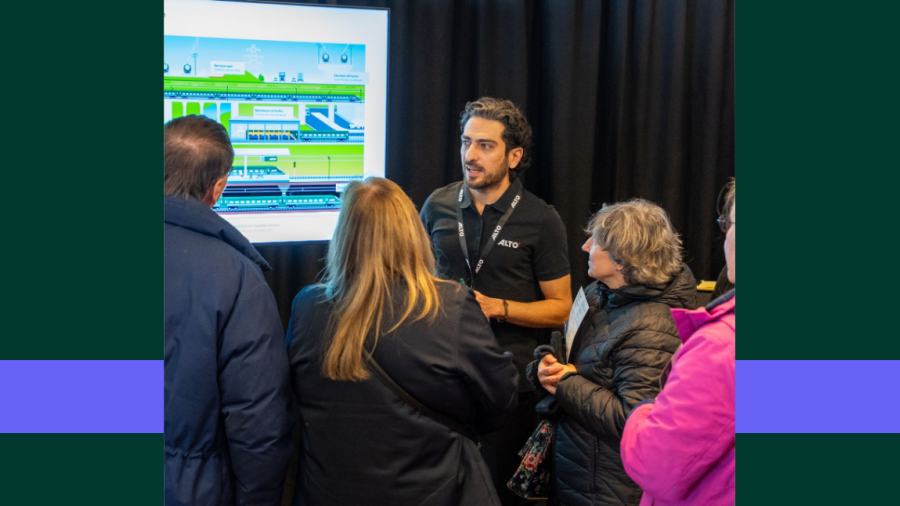
Another very enriching week for the Alto project, during which we had the opportunity to engage with residents, community groups, and municipal partners as part of the public consultation process.
Online and on the ground, these discussions allowed us to continue gathering valuable feedback on the corridor under study, better understand the concerns being raised, and share information in a transparent manner.
A look back at the questions we have heard most often over the past few weeks.
Why is the project taking so long? Couldn’t it move faster, like in China?
For a project on the scale of Alto, spanning nearly 1,000 km, the timeline reflects the Canadian context: strict safety, environmental, and consultation requirements, as well as climate and terrain constraints. Approval processes, land acquisition frameworks, and construction conditions are different from one country to another. Our priority is to do things properly, without cutting corners.
That said, Alto draws on international best practices to move forward as efficiently as possible, while respecting the environment, community dialogue, and Canadian standards.
Could the future rail corridor divide neighbourhoods or villages, turning roads into dead-ends and forcing residents to make long detours?
Alto has no intention of running through village cores. The project first seeks to follow existing corridors, such as roads, railways, or power lines, in order to limit impacts on living environments.
Where the corridor intersects with existing roads, Alto will work closely with municipalities, local communities, and emergency services to maintain safe road access. Crossing solutions, such as bridges or underpasses, will be developed in collaboration with local authorities to avoid isolating areas and to preserve territorial connectivity.
How close will the high-speed rail line be to homes, and what standards apply?
In residential areas, the priority is to define an alignment that minimizes impacts on communities, both during construction and operations, while ensuring safety and quality of life.
The alignment will be designed based on best practices regarding proximity between rail infrastructure and properties. Ongoing technical, environmental, and social analyses aim to identify the lowest-impact alignment in close collaboration with communities and municipalities. Appropriate mitigation measures will be assessed and implemented, such as noise barriers, to ensure harmonious coexistence with surrounding areas.
Could the project affect property values due to noise near the corridor, or increase prices near stations? Will property owners be compensated?
It is still too early to assess the project’s potential effects on property values, as it remains in the development phase. The alignment will be defined with the objective of minimizing impacts, including noise and visual effects. Alto will work closely with communities, municipalities, and local stakeholders to define appropriate mitigation measures as analyses progress.
Near stations, improved connectivity can enhance the attractiveness of serviced areas. In many countries, high-speed rail has supported the development of mid-sized cities and contributed to increasing housing supply, which can help moderate prices over time. Alto is working with municipal and regional partners to ensure these benefits support balanced local development.
What happens if the high-speed rail alignment crosses a cemetery or a site of heritage value?
Alto’s objective is to design a project that minimizes impacts while maximizing benefits for communities. Protecting cultural heritage, including cemeteries, is a priority. As part of field studies, the human environment study identifies heritage elements, whether visible or underground.
This information feeds into the impact assessment and helps guide design decisions to avoid sensitive sites wherever possible. Throughout the development and pre-construction phase, Alto consults with communities to prioritize solutions that avoid, minimize, or, where necessary, responsibly and respectfully mitigate potential impacts.
Continuing the conversation
As the project evolves, ongoing dialogue with the public remains essential to inform our analyses and guide future decisions for the high-speed rail network. Alto remains attentive and committed to providing clear and accessible information throughout the process.
We invite you to visit the Alto blog regularly to discover upcoming responses to frequently asked questions and to share your feedback through our online consultation platform, open until April 24, 2026.
Share this blog post
Subscribe to the blog RSS feed