Published on March 19, 2026
Updated on September 9, 2026
One of the most frequent questions we are asked is why we are moving forward with a plan for high-speed rail (HSR) rather than high-frequency rail (HFR), which was initially considered by the federal government.
While both options were thoroughly evaluated, the decision was based on an in-depth analysis that clearly demonstrated that only high-speed rail can fully meet the current and future mobility needs of the Toronto to Québec City corridor.
Three critical factors
HFR falls short of transforming corridor mobility
The central limitation of HFR is that it does not fundamentally change travel within the corridor. To attract travellers away from cars and airplanes at scale, rail service must offer a step change in travel times, convenience, and connectivity.
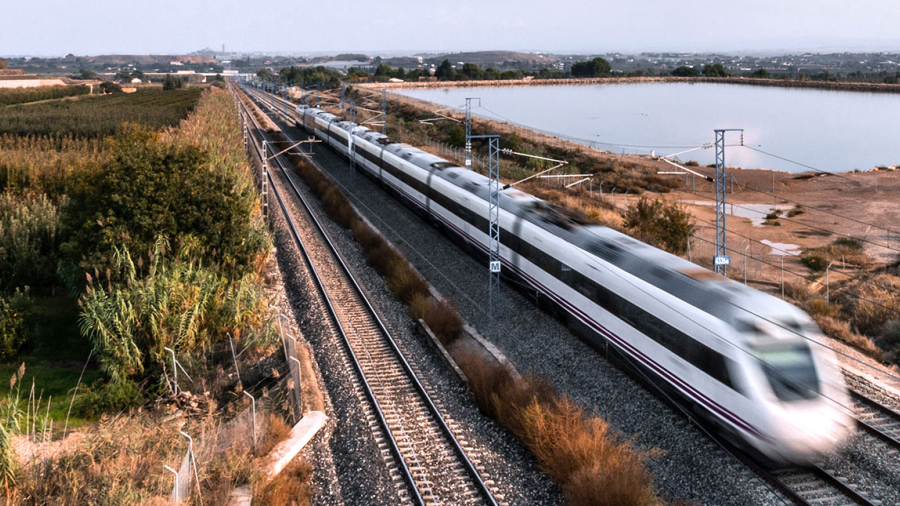
HFR would operate at speeds of 160 to 200 km/h, while Alto's HSR service would exceed 300 km/h. As a result, Alto would cut travel times between major cities by roughly half compared with today's conventional rail services, bringing many city pairs within practical day-trip and same-day business travel range.
This difference in performance is not merely technical. It is what determines whether rail can compete effectively with other modes and meaningfully reshape travel patterns across the corridor. While HFR would improve passenger rail service, the improvement would be insufficient to drive the large-scale mode shift, ridership growth, and connectivity gains required to transform the Canadian economy.
HSR is a better long-term investment
Because high-speed rail delivers a transformational improvement in mobility, it also generates substantially greater economic returns. The contrast becomes clear when looking at the numbers: for roughly one-fifth more in capital cost, high-speed rail delivers five times the economic impact.
A common assumption is that building HSR) would be significantly more expensive than HFR). Yet the available evidence suggests otherwise. While HSR does require a higher upfront investment, the difference in capital costs is smaller than many might expect, with HFR estimated to cost $45-75 billion compared with $60-90 billion for HSR.
While HSR requires an upfront investment approximately 20% to 30% greater than HFR, the additional cost is outweighed by the significantly larger economic benefits it delivers. In the long run, HSR provides much greater value for money.
Based on our forecasts, HSR will permanently uplift Canada’s GDP by $24.5 billion (or 1.1%), providing the Canadian economy with the boost it needs. Conversely, HFR would not generate sufficient ridership to drive the same degree of structural economic transformation, as it would deliver a more limited improvement in travel times and mobility. Its annual impact on Canada's GDP is estimated at $4.9 billion (0.2% of GDP). Additionally, building HSR would have a greater impact on regional economies in the corridor, supporting 6,000 more jobs during construction than HFR.
Cost and benefit comparison of "high-frequency" and high-speed rail options
"High-Frequency" Rail | High-Speed Rail | Δ% | |
Top speed | 200 km/h | 320 km/h | +60% |
Capital cost (billions, $2024) | 45-75 | 60-90 | +20% |
Direct welfare benefits (billions, $2024) | 33.6 | 49.5 | +47% |
Construction jobs supported | 44,000 | 50,000 | +14% |
GDP uplift (billions, $2019) | 4.9 | 24.5 | +400% |
The comparison becomes even clearer when direct benefits to Canadians are examined. HSR is expected to generate approximately $49.5 billion in direct welfare benefits, compared with $33.6 billion for HFR. These benefits represent tangible gains for Canadians, including travel time savings, lower transportation costs, reduced congestion, improved road safety, and environmental benefits.
HFR would also require extensive new infrastructure
Another common perception is that HFR could be implemented with minimal impacts on developed areas and agricultural land. In reality, much like HSR, HFR would require the construction of substantial new railway infrastructure, leaving a meaningful footprint along the corridor with much fewer benefits to show for it.
Canada's existing rail network is shared by passenger and freight services, whose differing operational requirements create delays and limit reliability for passenger trains. HFR could not simply operate on this current network and deliver the level of service expected from a modern intercity rail system; even with its moderate targets compared to HSR. To achieve its proposed travel times and service frequencies, HFR would also require the construction of significant sections of new, dedicated passenger infrastructure. HFR would therefore require major infrastructure development across both urban and rural areas.
The question, therefore, is not whether HFR would have an impact, but whether its benefits would justify it. Based on our analysis, they would not.
High-speed rail will combine frequency and performance
So why HSR and not HFR? The answer lies in selecting the option that delivers the greatest long-term benefits and the strongest return on investment for Canadians. While both options require significant new infrastructure, HSR delivers greater mobility benefits and stronger economic impacts for Canadians.
It’s not about choosing between frequency and speed. With Alto’s high-speed rail, Canadians can have both.
To stay informed about the project’s progress:
Sign up for our newsletter
Follow Alto on LinkedIn and Facebook
Share this blog post
Subscribe to the blog RSS feed