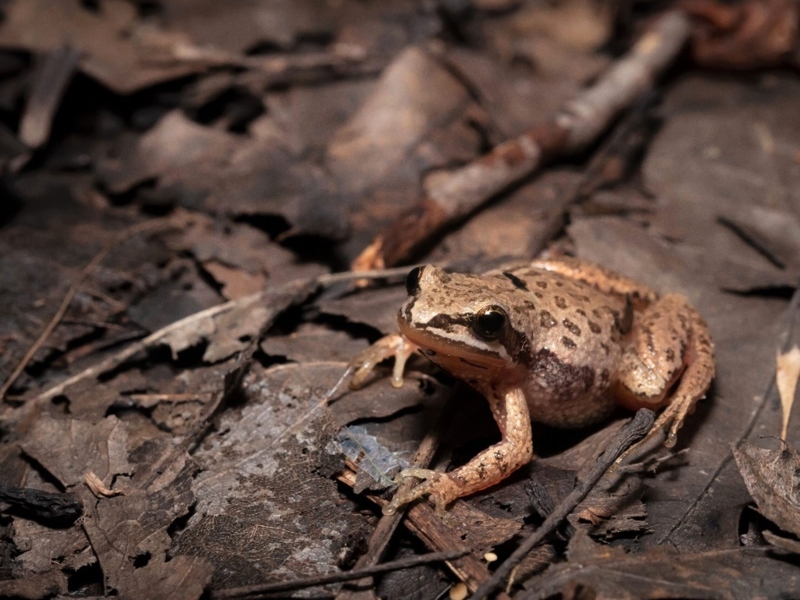
Understanding amphibians studies: Key words and definitions
Amphibians
Amphibians are mostly four-legged animals with backbones that warm and cool their body using the surrounding environment. They typically begin their life in or near water as larvae with gills and undergo metamorphosis to become air-breathing adults with lungs and moist skin. Amphibians include frogs, toads, and salamanders.
Why study amphibians?
Amphibians eat a variety of insect pests, which is beneficial to agriculture and human health. Amphibians, including their eggs, tadpoles, and adults, are also an important food source for many other animals and support a large food web involving other amphibians, reptiles, birds, mammals, and fish. Their moist, permeable skin makes them particularly vulnerable to drought and toxic substances, making them exceptional indicators of ecosystem health. Field studies will help us better understand and protect amphibians and their habitats when building and operating the new railway, while establishing a baseline for future studies.

What do amphibian studies involve?
Amphibian studies specifically look for the presence of western chorus frogs (Pseudacris triseriata), four-toed salamander (Hemidactylium scutatum), as well as other salamanders, frogs, and toads. Alto biologists will listen for and record amphibian calls from wetlands, vernal pools, woodlots and surrounding areas. Active searches also involve searching within mounds of sphagnum moss within and near wetlands and beaver ponds.