Published on April 22, 2026
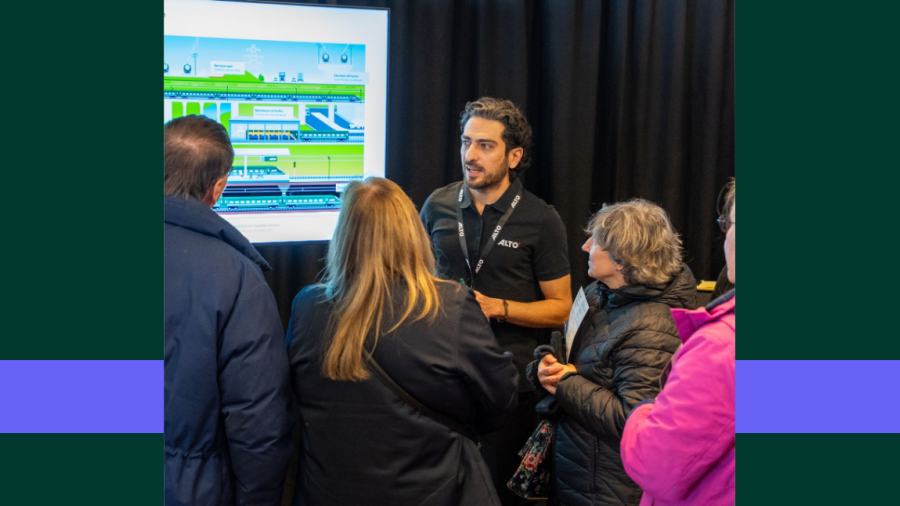
The public consultation on the corridor under study for the high-speed rail project is entering its final week. Over the past few months, thousands of open and constructive exchanges have helped introduce the project to the public, based on the information available at this early stage of development, and have deepened our understanding of local expectations, concerns, and needs.
We chose to engage early, before defining a specific alignment, so that input from residents, municipalities, Indigenous communities, and organizations could directly inform technical analyses and design decisions. The feedback collected plays a key role in refining the study corridor, particularly in identifying areas and issues that require special attention.
As this first round of consultation comes to a close, we revisit some of the most frequently asked questions raised during our engagement activities.
Beyond Alto’s long-term climate benefits, how much CO₂ will be generated by the construction and operation of the project?
The net climate benefits of the high-speed rail project will be significant. Like any large-scale infrastructure project, however, Alto will generate greenhouse gas emissions during the construction and operating phases, notably from construction activities, the use of machinery, and the production and transportation of materials such as concrete and steel.
At this stage, it is not yet possible to precisely quantify these emissions. Estimates will be refined as planning progresses and integrated into upcoming environmental analyses. Alto intends to apply recognized best practices in design, construction, and operations to reduce emissions where possible and to implement mitigation and compensation measures when needed.
Over the long term, the use of low-emission energy sources and an electrified rail network will encourage a modal shift of millions of trips from cars and planes to rail. This transition will support Canada’s climate goals, with emissions reductions comparable to removing approximately 100,000 cars from the road each year.
How does Alto plan to protect local economic activity and jobs, such as industry, agricultural businesses, and recreation and tourism sites, when planning the final route?
Alto is engaging with communities from the earliest stages of the project to ensure that municipalities, Indigenous communities, chambers of commerce, representatives of industrial zones, and employers, including agricultural businesses, major employers, and tourism and recreation stakeholders, can share their concerns and directly inform technical analyses and design decisions.
Feedback gathered through the consultation process is documented and used to refine the study corridor, particularly to local businesses, farms, workplaces, community assets, and others that may require special attention. This information helps avoid sensitive locations where possible and adapt the project to local realities in order to protect economic activity and community vitality.
The railway corridor will be approximately 60 metres wide, and every effort will be made to minimize disruptions at all stages. Where possible, Alto will rely on existing infrastructure corridors such as roads, railways, and power transmission lines to limit impacts on residential areas and economic activities.
Through its geotechnical studies, how does Alto take into account the risk of disrupting agricultural activities, particularly during planting and harvest periods, as well as biosecurity concerns and soil integrity?
As part of its geotechnical studies, Alto takes a structured and respectful approach to agricultural activities. All work on private property is carried out on a voluntary basis, with the owner’s prior authorization and under a formal agreement that includes financial compensation. No surveys are conducted without consent.
Each site visit is preceded by at least 48 hours’ written notice, detailing the nature, location, and duration of the work, to limit disruptions, especially during planting and harvesting periods. The methods used (borings, soil sampling, in-situ testing, and groundwater monitoring) are targeted and localized.
Precautions are taken to preserve soil integrity and agricultural land. If damage occurs, affected areas are restored to conditions comparable to their original state. Alto also works with property owners to apply all required biosecurity measures to reduce risks to crops and livestock.
When will the alignment be known, and will there be additional consultations?
In the coming weeks, our teams will be reviewing all comments and concerns shared during the public consultation on the study corridor. This work will lead to the release of a consultation report summarizing the discussions held and the key issues raised by the public.
At the same time, the feedback received is already informing ongoing technical and environmental analyses aimed at further defining the corridor, with an initial focus on the central segment of the project between Ottawa and Montréal, while taking local conditions and sensitive areas into account.
A more detailed study corridor for the central segment is expected to be presented this fall, followed by a new round of public consultation by the end of 2026. The western and eastern segments will follow a similar process, with further consultations as additional information becomes available.
Let’s keep the conversation going
After nearly 100 days of public consultation, the exchanges have been rich and meaningful. Your questions, comments, and concerns have provided valuable insight to guide ongoing analyses and help shape the best possible project for Canadians.
Every contribution matters. Whether it is a question, a comment, or a concern, all feedback received is taken into account and directly informs our teams’ work.
You have until April 24, 2026, to share your feedback on the study corridor through the online consultation platform. While this first round of consultation is coming to an end, the conversation will continue at every stage of the project.
We invite you to follow upcoming announcements and subscribe to Alto’s newsletter to stay informed about the next steps. Together, let’s continue shaping a high-speed transportation network that reflects the realities of communities.
Share this blog post
Subscribe to the blog RSS feed