Published on March 6, 2026
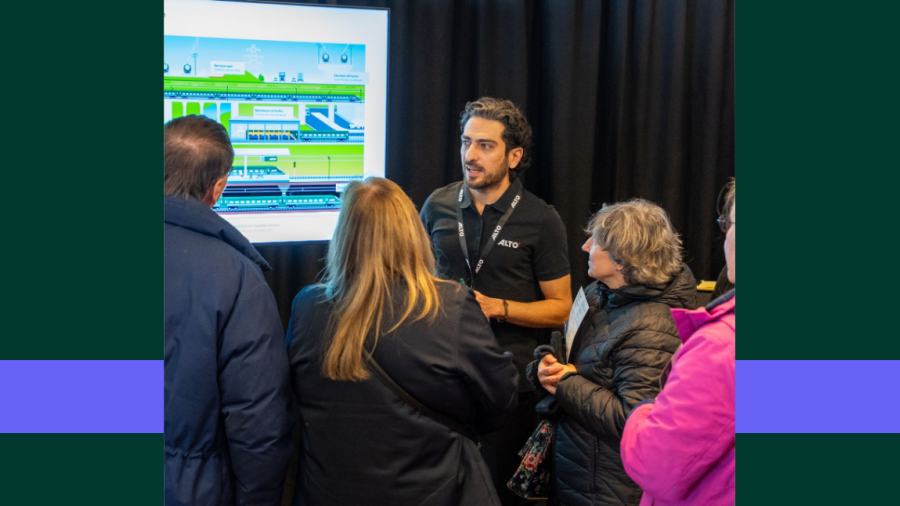
The public consultation process on the Alto project is ongoing, and citizen engagement is strong throughout the corridor under study. The past week was marked by many meetings and honest discussions with citizens and stakeholders on the high-speed rail network project.
Both online and in person, you have taken the time to ask questions, share your comments and express your expectations regarding the high-speed rail project. Thank you for your continued participation. It is critical to moving the project forward in the right direction.
In this post, we’ll go over some of the past week’s frequently asked questions.
How much will the project cost and who is financing it?
At this preliminary stage, working assumptions place the cost of a high-speed rail network at between $60 billion and $90 billion. These estimates are for planning purposes only and should not be considered as a project budget. They will be refined as the development and pre-construction phase progresses, based on factors such as the chosen alignment, selected technologies and market conditions.
The Government of Canada has committed to investing $3.9 billion over six years for the project’s design and development, in partnership with Cadence. In the long term, financing will be based on a combination of private capital, fare revenue and targeted public investment, with construction and operating risk shared with Cadence.
This is a pivotal investment that will generate significant economic, environmental and social benefits, with upfront costs offset by strong long-term revenue potential.
Why haven’t the studies supporting the project proposal been made public and when will they be?
The studies conducted to date have laid the groundwork for the project, providing a better understanding of the territory and guiding the work in the development and pre-construction phase. At this stage, these are not final studies. Data analysis will continue until a precise alignment is established and beyond.
The information will be made public gradually, in compliance with regulatory requirements and privacy rules.
It should also be understood that the project is subject to the Canadian Impact Assessment Act, which provides for a rigorous and transparent project review process. Documents related to the impact assessment, including supporting studies, will be made public and accessible to all as part of the official federal process.
How is public feedback collected, particularly during the open house events, and how does Alto take it into consideration in the project?
Input from the public is central to Alto’s consultation process. Whether collected in person, online, or in writing, all comments and questions are documented and incorporated into our analyses in preparation for the next stages of the project. These exchanges will be reflected in the public consultation report, which will be released in the coming months.
At open house events, team members record comments using tablets, while experts document the nature of the exchanges in an event report. Virtual sessions also allow us to collect and document participant questions and comments. At the same time, discussions with elected officials, target groups and organizations are systematically recorded. The online consultation platform offers multiple ways to register feedback, such as through the survey, interactive map and brief submission process. Comments can also be submitted at any time by email to [email protected].
This public input helps guide the next steps of the project. Further rounds of consultation are planned to keep the dialogue open as the project evolves.
What is the overall project timeline, from final route selection to construction and commissioning?
A project of Alto’s scale requires years of planning and construction.
Our areas focus at the moment are detailed network design, field studies, impact assessments and public consultations. The current process involves the corridor under study between Québec City and Toronto, an area of about 10 km wide. A narrowed corridor for the Montréal-Ottawa segment will be presented towards the end of 2026 and will be subject to further public consultation. Those for the remaining segments will gradually follow.
Subject to government approvals, construction could begin around 2029–2030. It will be carried out in phases, starting with the Ottawa–Montréal segment. The network will be put into service gradually, without waiting for the entire network to be completed, which could take around 12 years.
Rather than investing in a new high-speed rail network, why not improve existing rail services, such as VIA Rail?
The answer lies in the scale of present and future travel needs in the Québec City–Toronto corridor and the structural limitations of the existing network.
This corridor, which is home to nearly half of Canada’s population, is experiencing a sustained population and economic growth that the current intercity transportation system cannot sustainably accommodate. Today, VIA Rail operates primarily on tracks shared with freight transport, which limits service frequency and can affect on-time performance. Even with improvements, this shared network cannot provide truly faster and more reliable travel on a large scale.
The Alto project will be based on an electrified, passenger-only infrastructure designed to address these challenges. VIA Rail will remain the national passenger rail carrier, while high-speed rail will complement the existing service in the corridor. Together, they will form a stronger public rail network that is better suited to the current and future needs of Canadians.
Let’s keep talking
Every question, comment and concern contributes to the thinking surrounding the project. Alto continues to welcome your input. We will continue to use this blog to address the questions that frequently arise in our discussions with you.
We encourage you to check out the Alto blog regularly and share your feedback on our online consultation platform.
Share this blog post
Subscribe to the blog RSS feed