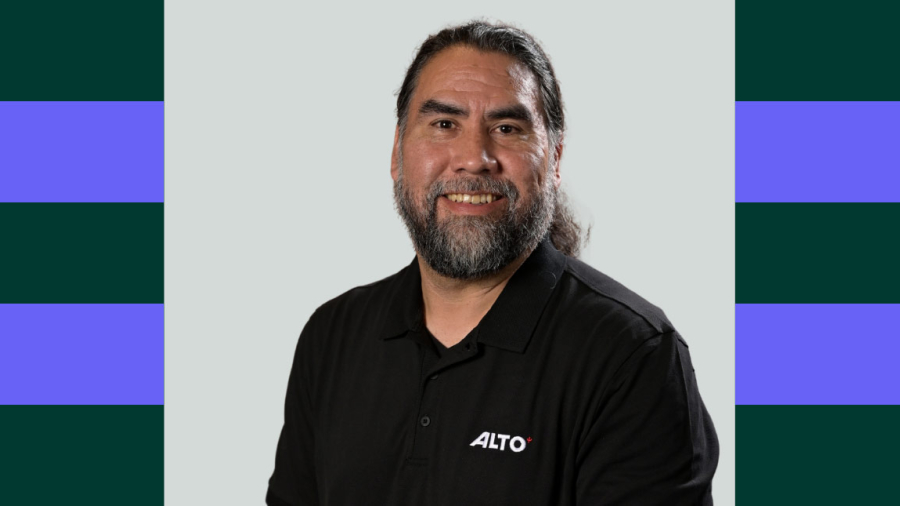
Published on April 20, 2026
At Alto, the environment is a core pillar of the project that’s incorporated into every stage of planning and decision-making. For Marjorie and the rest of the Environment team, every day is driven by a clear objective: designing a high-speed rail network that blends responsibly and sustainably with the land it passes through.
See what a typical day in Marjorie’s life looks like!
Collaboration is key: Working with a range of stakeholders
8:00 a.m.
Marjorie likes to get to the office early. She uses this quiet time to check her email and review ongoing issues before starting her busy day. Then, she has a series of meetings until lunch.
9:00 a.m.
The first meeting is about the study corridor. Every week, members of the technical team meet to see how the project is progressing. Marjorie receives updates on ongoing environmental studies and shares key elements that need to be monitored. These discussions ensure that environmental considerations remain top of mind in the technical design at each stage and are not just an afterthought.
10:00 a.m.
She attends a meeting with the Impact Assessment Agency. The goal is to align on every step in preparing the Project Description—a critical document scheduled for submission in early 2027. This work requires regular communication with the federal agency to validate the information requirements and ensure a rigorous, transparent process.
11:00 a.m.
Next, she meets with the Cadence team, whom Alto is conducting the environmental analyses within the study corridor. Marjorie is there to check in on how the work is progressing, discuss preliminary results, and ensure consistency across the various studies underway.
11:30 a.m.
Just before lunch, Marjorie joins the Indigenous Relations team for her last meeting of the morning. At Alto, this dedicated team works closely with the Environment team to ensure a respectful, integrated, and consistent approach. Together, the teams discuss the potential impacts raised, the sharing of information, and the coordination between environmental processes and the ongoing dialogue with the Indigenous groups involved in the project. The knowledge and expertise of these groups contribute to a deeper understanding of the land, based on observations of natural and cultural environments as well as traditional land use. These discussions help guide project planning (specifically field studies) while respecting community protocols and integrating these considerations from the earliest project phases.
Observe, measure, understand
1:00–4:00 p.m.
Marjorie heads into the field to one of the areas in the study corridor to see the ongoing data collection activities firsthand. While much of the environmental work involves analyzing existing data and consulting with various stakeholders, field studies are vital because they provide a deeper understanding of the land that goes beyond what maps and databases can show.
For Alto, these studies are a key part of the project’s development and pre-construction phase. They are used to establish environmental baselines—essentially a detailed snapshot of the biological, physical, and human environments before the project begins. This scientific data is essential for predicting potential impacts, helping to refine the train’s route and determine how to avoid, reduce, or mitigate effects on the environment, as needed.
In the field, specialized teams—including biologists, hydrologists, engineers, environmental experts, and others—gather various types of data. Depending on the area and season, this work may include observing plants and wildlife, studying animal habitats, analyzing waterways and wetlands, collecting soil samples, or measuring noise and vibration levels using specialized equipment.
These activities are carried out over several years using proven methods that meet all regulatory requirements. It’s an iterative process that allows the team to gradually deepen their understanding of the land and refine their analyses as the project moves forward.
Marjorie uses these field visits to touch base with teams, check on their progress, and help ensure all protocols are being followed. These exchanges are invaluable, as they help connect scientific data to the actual conditions on the ground.
A critical foundation for future decisions
The data collected during field studies play a central role in the federal impact assessment process and in future decisions regarding the route, design, and mitigation measures. It helps decision-makers understand local issues and design a project aimed at maximizing benefits while minimizing the impact on ecosystems and local communities.
For Marjorie, these visits are a reminder that field studies are more than just a regulatory requirement. They are central to a responsible approach based on science, knowledge of the land, and respect for communities. Behind every data point and analysis is a real landscape that must be understood, respected, and protected throughout the full lifespan of the project.
Share this blog post
Subscribe to the blog RSS feed